Electric vehicle demand is built by an entire system. BYD modelled all of it.
~37%
Test drives directly influenced by marketing activity
~320,000
Test drives analysed across two years
~20×
Efficiency differences identified across the media mix

Overview
BYD needed to understand what was creating demand, not just capturing it.
Electric vehicle demand is shaped by far more than media alone. Consumer behaviour is influenced by fuel prices, economic confidence, charging infrastructure and broader sentiment around EV adoption. Prophet helped BYD move beyond traditional attribution by modelling how these forces interacted across the entire demand system over time.
A digital clone of the demand system
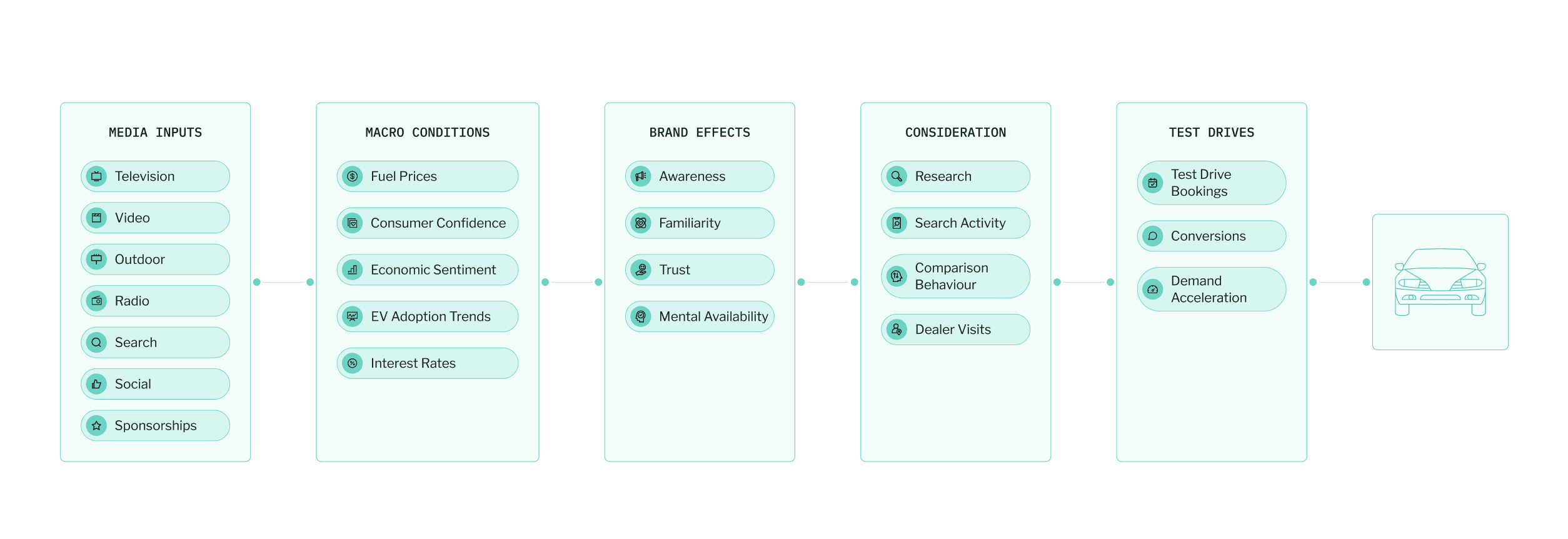
Prophet built a simulation of BYD’s full marketing ecosystem, combining media investment, brand effects and macroeconomic conditions into a single demand model. Using more than two years of data, 320,000 test drives and over $20M in media investment, the model measured how channels interacted, how advertising effects persisted over time and where diminishing returns began to emerge. The result was a forward-looking simulation environment designed to improve investment decisions before budget was committed.
Key Insights
1. Demand already existed. Marketing determined where it went.
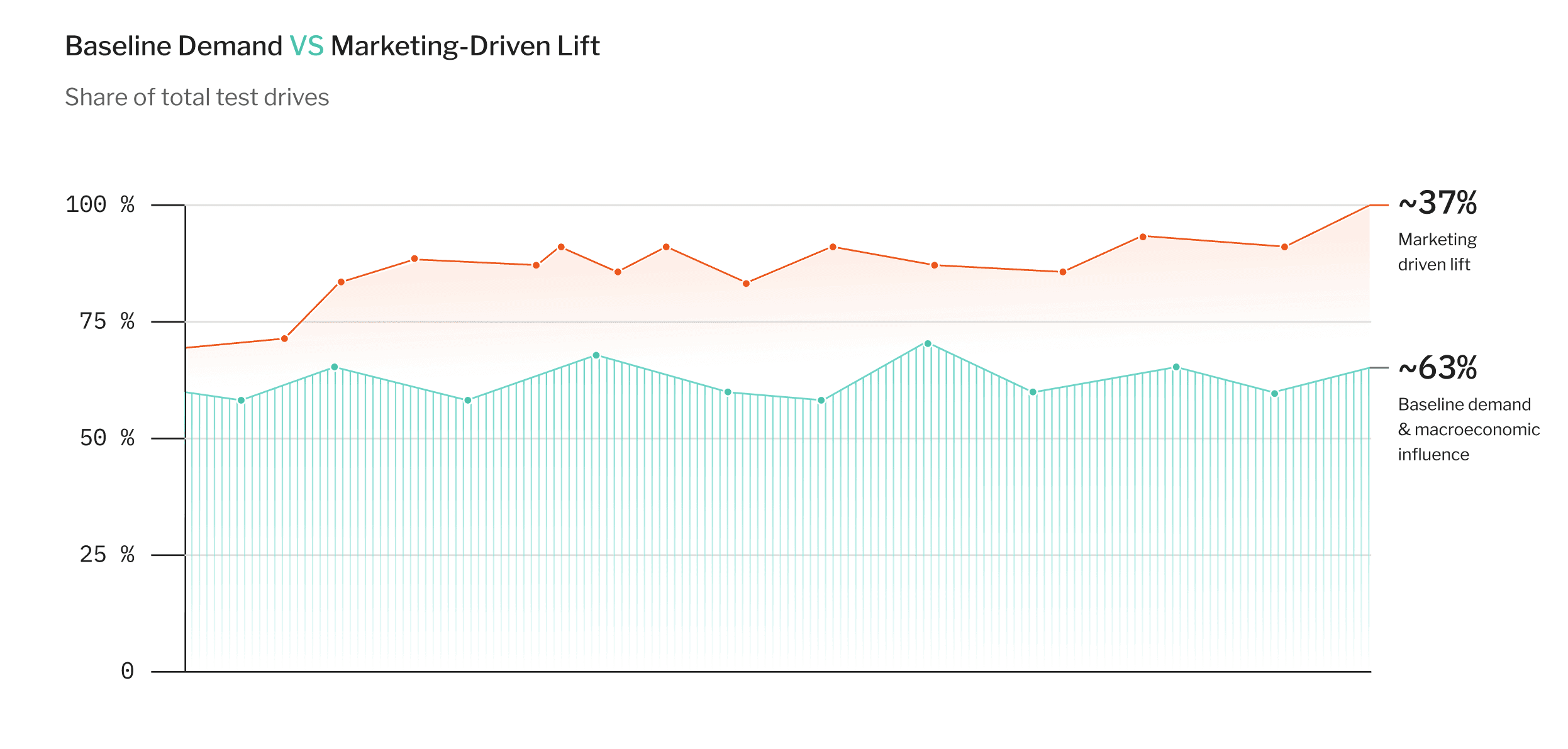
~63% baseline demand and macroeconomic influence
~37% marketing-driven lift
Australia’s growing interest in electric vehicles created strong underlying category demand. But that demand was not automatically captured by BYD.
Marketing activity influenced more than 37% of total test drives, shaping which brand consumers chose and accelerating when they acted.
Without media investment, demand for EVs would still exist. But conversion would happen more slowly, less efficiently, and more often in favour of competitors.
The analysis showed that marketing was not simply generating awareness. It was directing demand inside an already active market.
2. High-reach media created disproportionate impact
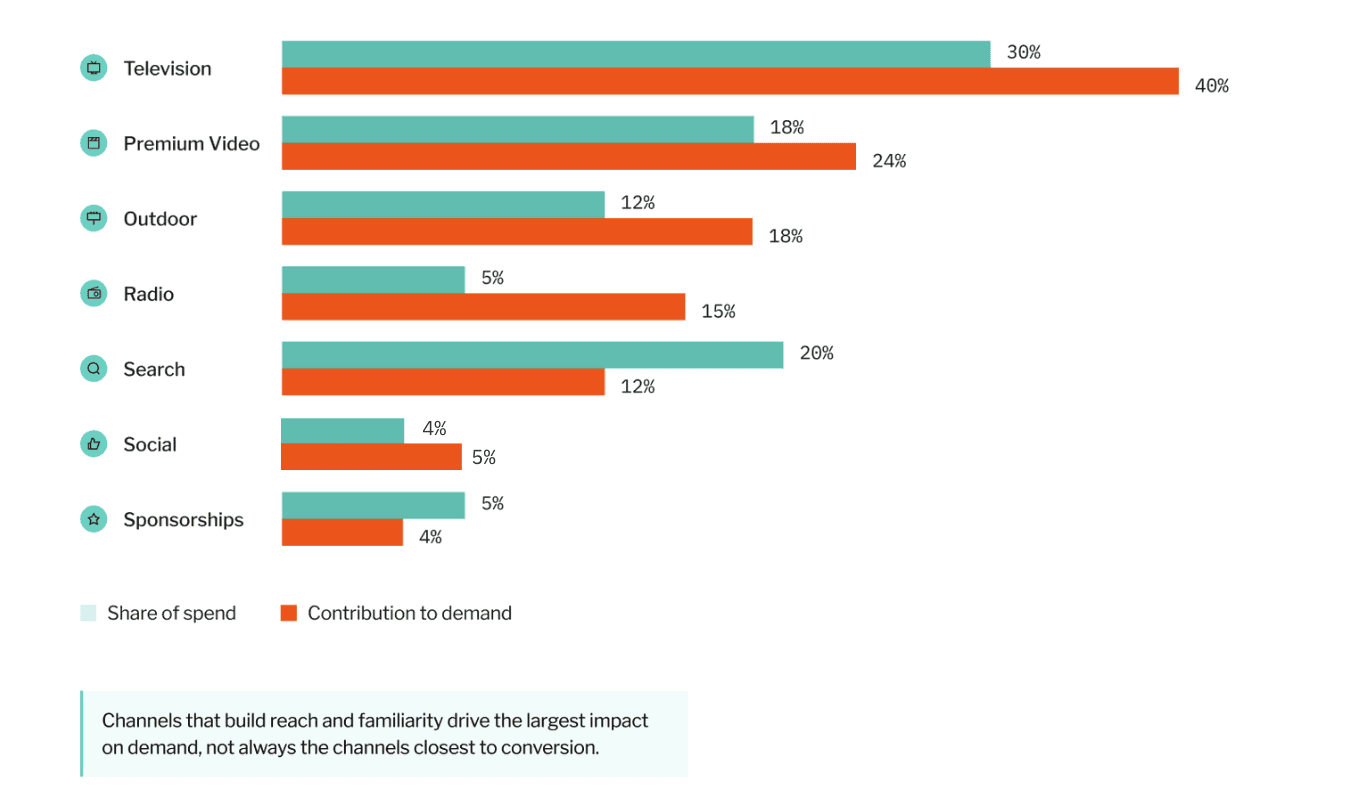
Television, premium video and outdoor delivered the largest contribution to demand creation across the portfolio.
These channels built familiarity and legitimacy at scale, reinforcing BYD’s presence long before a consumer reached the point of active consideration.
Radio delivered approximately 3× more demand contribution than its share of spend, generating meaningful incremental demand despite receiving a comparatively smaller portion of the budget.
The findings reinforced a core principle often missed in platform reporting: channels that create demand are not always the same channels that capture it.
3. Search performance depended on brand activity
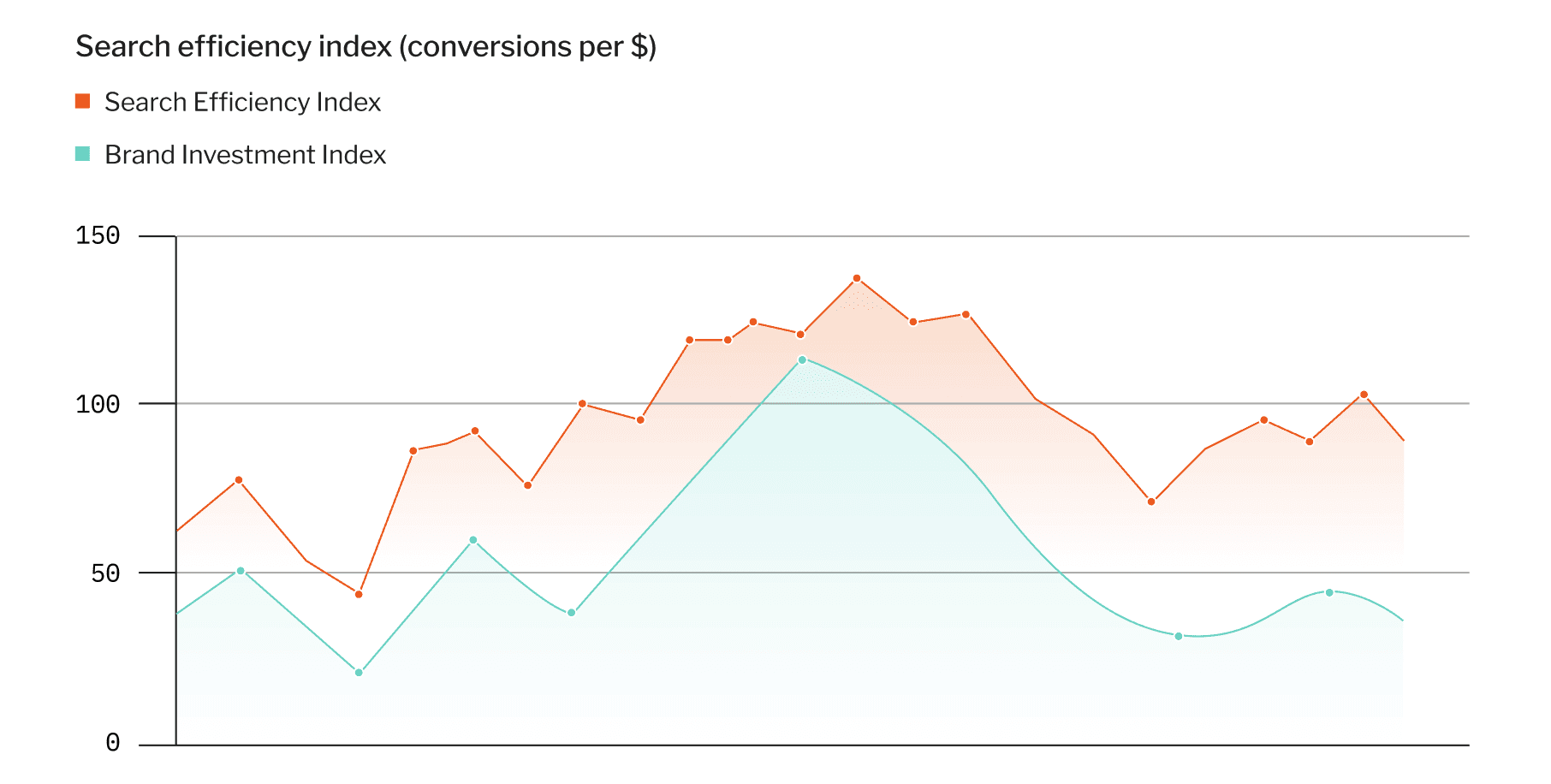
Paid search captured significant volumes of active intent, particularly during periods of elevated EV interest.
But search efficiency was not independent.
Performance weakened materially during periods where broader brand activity was reduced, increasing acquisition costs and lowering conversion efficiency.
Search was functioning downstream of brand investment, not separately from it.
Consumers were not simply “searching for EVs.” They were searching for brands they already knew, trusted and had mentally shortlisted through broader media exposure.
Outputs
Marketing decisions stopped being made channel by channel
BYD gained a system-level view of how media, brand and macroeconomic conditions interacted to influence demand. Investment decisions could now be tested against the behaviour of the entire market ecosystem before budget was committed.
This shifted marketing from retrospective reporting toward forward-looking decision intelligence.
Budget allocation became less about platform metrics and more about understanding how demand actually forms, accelerates and converts in the real world.
“As a new entrant, growth has never been about simply making noise. It’s about building confidence in a category evolving at speed".
Kate Hornstein, BYD Australia CMO